Announcement: Content analytics is now built into NEST
4 min read · Written on February 7, 2026

If you publish content regularly, you’ve probably felt this gap.
You write an article, launch a campaign, or put a form live. People visit it. Some stay, some leave. But understanding what actually worked usually means opening another tool, filtering reports, or trying to connect numbers that don’t fully explain user behaviour.
With this release, that gap is closed.
NEST now comes with built-in content analytics, designed to help you understand how your content performs and how real people interact with it. This works across articles, campaigns, and forms, and it’s available to every K34a client using NEST, as well as any organisation using NEST independently.
This is not analytics for analysts. It’s analytics for people who publish, decide, and improve.
Analytics where the work already happens
Every published article, live form, and active or completed campaign in NEST now has its own analytics view.
Instead of looking at overall website numbers and guessing which content mattered, you can open a specific piece of content and see its performance directly. Views, visitors, visits, time spent on the page, and engagement are all visible in one place.
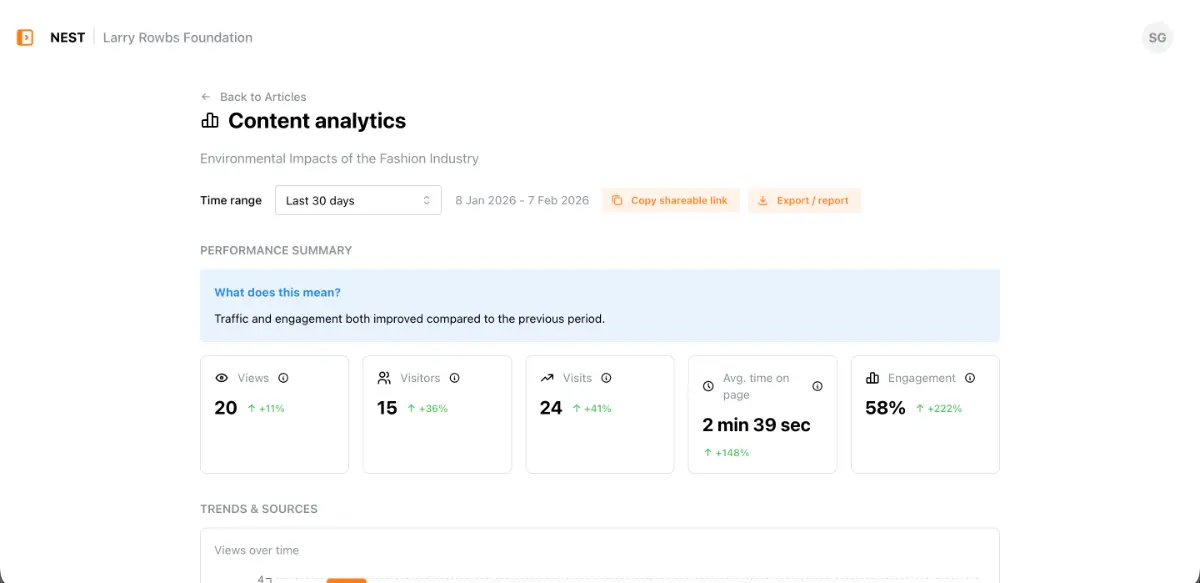 More importantly, these numbers are compared with the previous time period. So you don’t just see data, you see direction. You instantly know whether things are moving forward or slipping, without doing any mental math.
At the top of the page, NEST gives you a short explanation of what the data means in plain language. No dashboards full of noise. Just a quick answer to the question every team asks, is this working or not.
Understanding attention, not just clicks
Traffic alone rarely tells the full story.
A page can get views and still fail to hold attention. That’s why NEST highlights average time on page and engagement rate alongside traffic numbers. These metrics help you understand whether people actually stayed, read, and interacted.
If an article has fewer views but higher time spent and engagement, that’s a signal. If a campaign gets traffic but people leave quickly, that’s also a signal. NEST makes these patterns obvious without you having to dig.
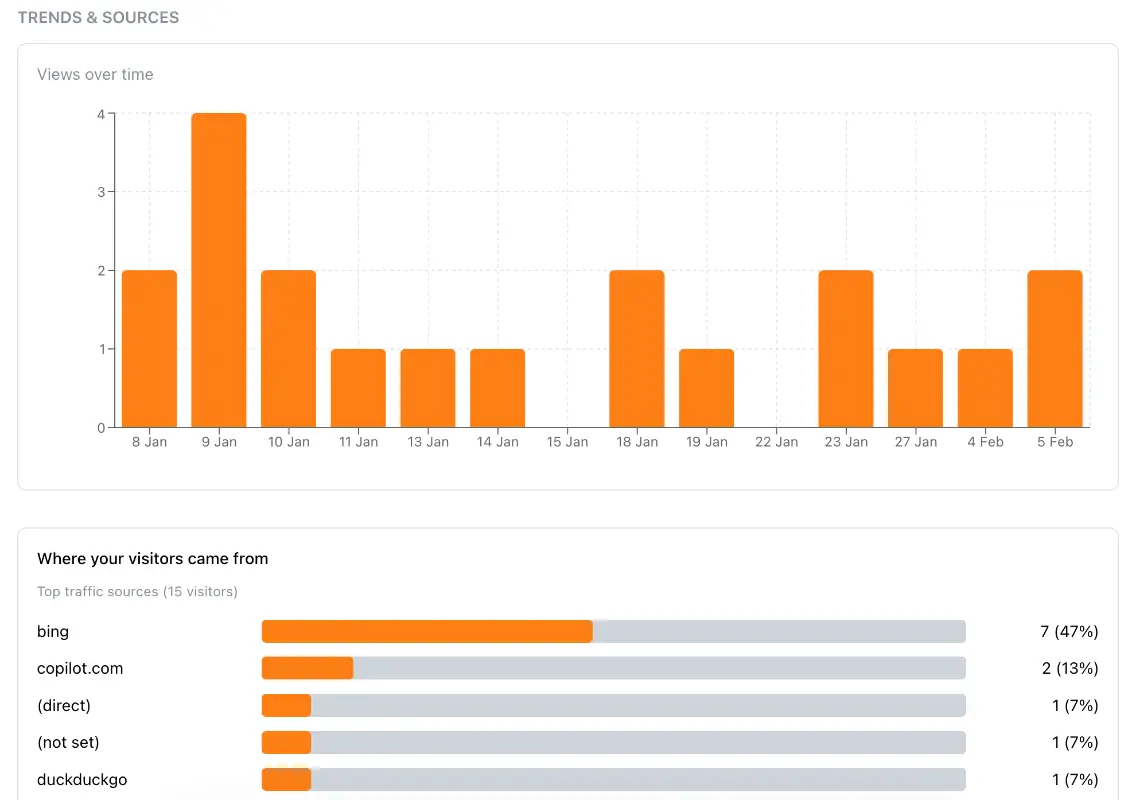
The daily views chart adds another layer. You can see when interest spikes, when it fades, and when it returns. This is especially useful after sharing content, sending newsletters, or promoting campaigns. You can finally see the effect of your actions.
Knowing where people come from and who they are
Good decisions come from context.
For each article, campaign, and form, NEST shows where visitors came from. Search engines, direct visits, social platforms, referrals, it’s all there. This helps you understand which channels actually bring meaningful traffic, not just traffic that looks good on paper.
You also get a clear view of where visitors are located geographically. Seeing countries with real numbers and percentages makes your audience feel real. It helps answer practical questions like whether you are reaching the regions you expected, or discovering interest from places you didn’t plan for.
How teams actually use this data
This feature is meant to be used, not admired.
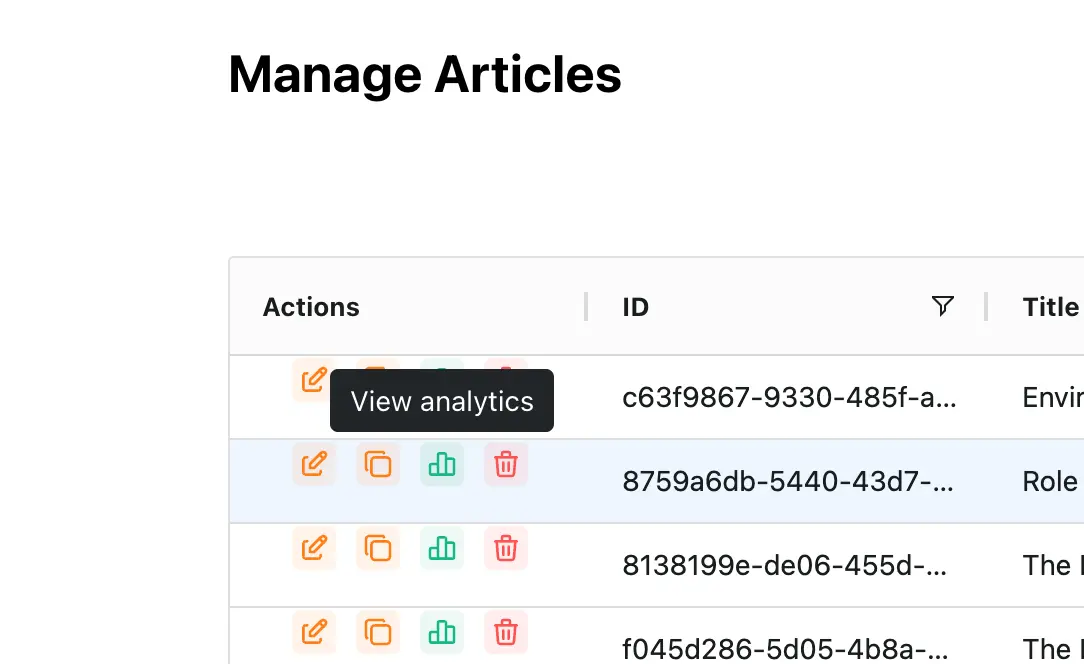
Teams use article analytics to decide what topics to write more about and which ones need a different approach. Campaign analytics help identify what messaging or timing works best. Form analytics show whether people are actually engaging or dropping off too early.
Over time, patterns start to emerge. You learn what holds attention, what converts, and what needs improvement. Decisions become simpler because they are backed by real behaviour, not assumptions.
You don’t need to export reports or set up custom dashboards. The insight is already part of your everyday workflow inside NEST.
Available across articles, campaigns, and forms
Content analytics in NEST works consistently across all content types. Whether it’s a long-form article, a time-bound campaign, or a form collecting responses, the same clarity applies.
This makes it easier to evaluate different kinds of content using the same lens, and to improve them using real feedback from actual users.
A step toward better decisions
NEST is a product by K34a, and this release reflects how we think about software. Tools should not just help you publish faster, they should help you learn faster too.
By bringing analytics directly into content, NEST helps teams focus on what truly matters. What people read. What they care about. And where effort should go next.
Good content decisions don’t come from guessing. They come from understanding. With content analytics now built into NEST, that understanding is finally part of the system.