Announcement: Instant Content Updates on Your Website
3 min read · Written on February 4, 2026

We have an important update to share about how content changes in NEST reflect on your website.
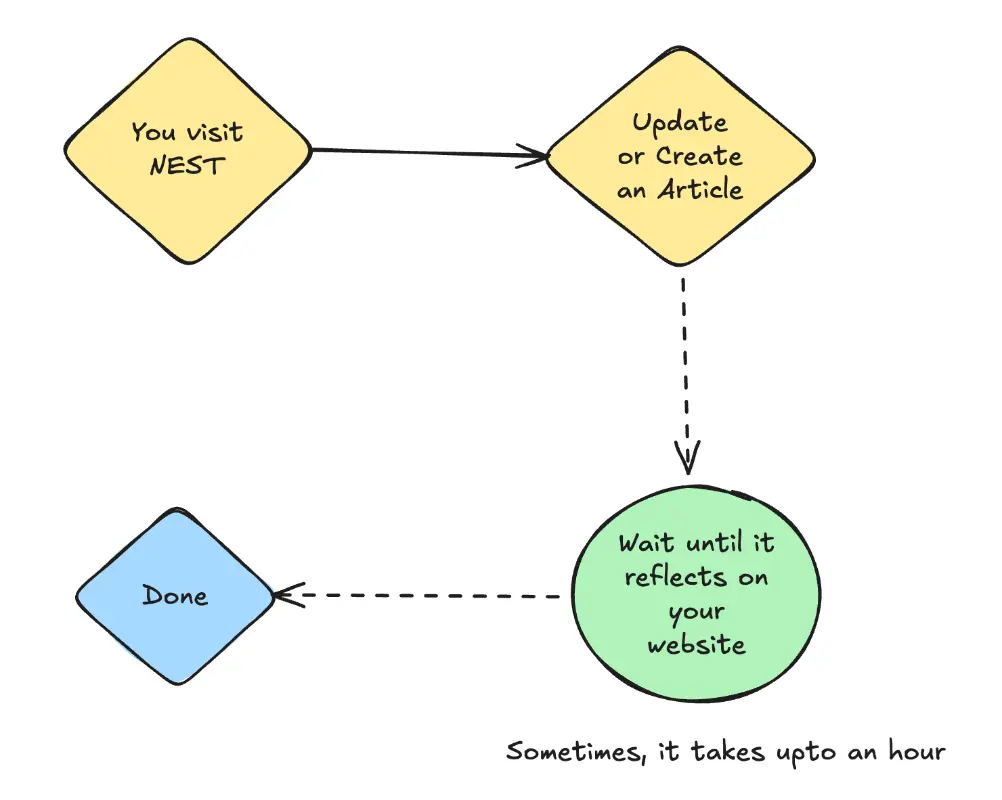
Until now, whenever someone created a new article, story, or fundraising campaign in NEST, it did not always appear immediately on their website. In some cases, the delay could be up to an hour. Many of you pointed this out, and frankly, you were right to feel frustrated.
This behavior existed because all websites and applications we build at K34a are heavily optimized using caching and static generation. These techniques allow pages to load extremely fast and handle traffic reliably, even at scale. To make this possible, every website had a cache expiry time configured. For some partner businesses, this cache TTL was set as high as one hour.
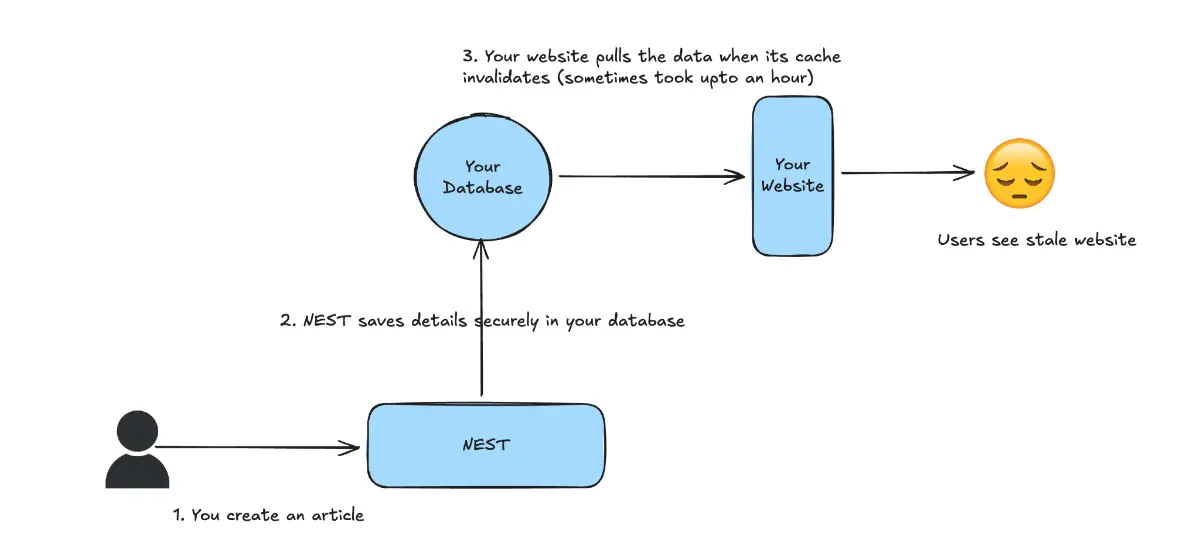
In practical terms, this meant that while your content was saved instantly and securely in the database, the website itself could continue serving older, cached data until that cache expired. Nothing was broken. The system was behaving exactly as it was designed to. But the experience was clearly not ideal, especially when you wanted something to go live right away.
That changes today.
We have now introduced on-demand cache invalidation for all K34a partners using NEST.
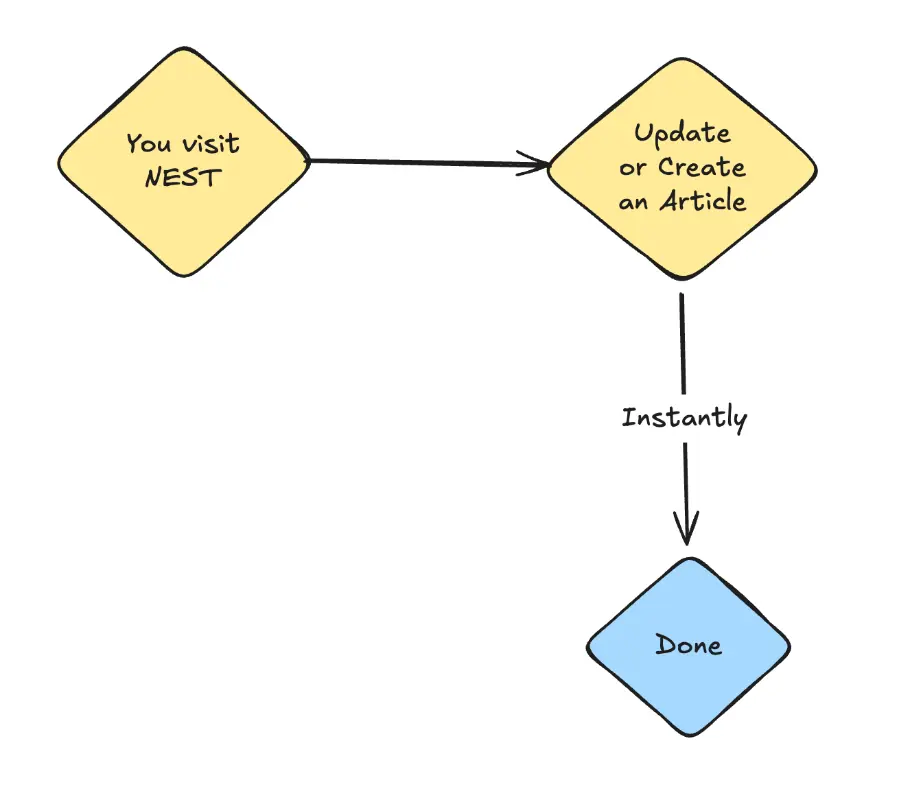
What this means is simple. Whenever you make a change in NEST that should reflect immediately on your website, we no longer wait for the cache to expire on its own. Instead, we actively invalidate the cache at the moment the change is made. As a result, your website pulls the latest data instantly.
No more waiting. No more wondering if the update has gone live yet.
To understand this better, it helps to look at how things worked internally earlier. When you created or updated content, NEST would store everything securely in your database. Your website, however, was optimized to serve cached pages. It would only fetch fresh data once its cache invalidated naturally, which could sometimes take a long time. During this window, users could end up seeing stale content even though the latest version already existed.
With the new system, that gap is removed. When you publish or update content in NEST, the platform now actively notifies your website to clear the relevant cache immediately. Once the cache is invalidated, the next request forces the website to pull fresh data from the database. The updated content becomes visible right away.
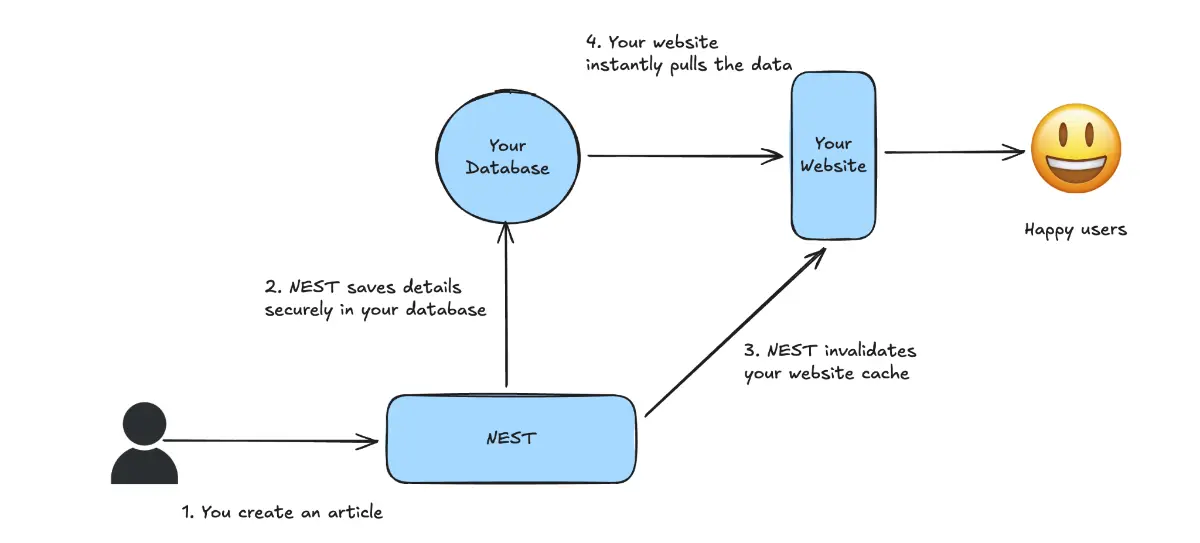
From a technical perspective, this is achieved using a secure revalidation route inside your application, typically exposed as /api/revalidate. You can use this gist to include this in your applications as well. This route uses Next.js cache revalidation under the hood. It is protected using a secret token, ensuring that only NEST can trigger cache invalidation and nothing else can misuse it.
The result is the best of both worlds. Your website remains fast, cached, and highly optimized. At the same time, critical updates are no longer delayed by cache TTLs. Editors can publish with confidence, knowing their changes are live the moment they hit save. Users always see the most up-to-date information, without inconsistencies or confusion.
Caching is still doing its job, but it no longer gets in the way of correctness.
This improvement is now live for all partners using NEST.