Vibe Coding: Best Practices to Build Better Products
7 min read · Written on February 27, 2026
At K34a, we build products that feel alive. Not just functional, not just scalable, but intentional. Vibe coding is not about randomly prompting AI and shipping what comes out. It is about controlling the direction of your product so that it feels human, sharp, and business ready.
This is how we approach it at K34a.
1. Design: Make It Feel Human, Not Generated
AI generated designs often look similar. Very curved corners. Heavy shadows. Glass effects. Soft neutral palettes. Perfect alignment. Polished but forgettable.

In one early stage SaaS project we audited, every card had 24px rounded corners and large soft shadows. It looked clean, but it looked like every template online. We reduced corner radius, removed extra shadows, used a strong background color, and simplified typography. Bounce rate dropped because the brand finally felt distinct.
Use defined corners instead of over rounded cards. Reduce shadows. Avoid blur effects unless they serve a clear purpose. Pick bold background colors. Keep text black or white wherever possible. If you use colored text, stay consistent within a tight shade range.
Do not change font families randomly. Stick to one or two. Maintain consistent font sizes across sections. Consistency builds trust.
Perfect alignment is not mandatory. Small asymmetries can feel intentional. Minor imperfections make the design relatable. Many users subconsciously trust designs that feel crafted instead of generated.
Avoid over decorating. Do not add color to random words just to create visual interest. Let spacing, contrast, and hierarchy do the work.
Design should reflect brand confidence, not template familiarity.
2. English: Simple Wins
Complicated language does not convert better.
In a fintech dashboard we worked on, the original copy was full of technical terms. Users kept asking the support team with basic questions. We re-wrote everything in a simpler language and added descriptions for jargons wherever they were still used. Support tickets reduced because users finally understood the product.
Use simple words. Remove jargon unless your audience expects it.
Keep medium length sentences - neither too long that users forget the context, nor too short that it doesn't communicate clear meaning.
Clear structure and flow of the content is very critical
Intentional minor grammatical mistakes can sometimes spark engagement. People notice those errors, and discuss them. But clarity should never suffer.
Understand your audience deeply. A developer tool can be direct and technical. A fashion brand can be expressive. A B2B analytics platform must be precise and structured.
Clarity builds trust faster than complexity.
3. Backend: Think Before You Prompt
AI can generate endpoints. It cannot design your system for you.
Before writing code, define how the system behaves.
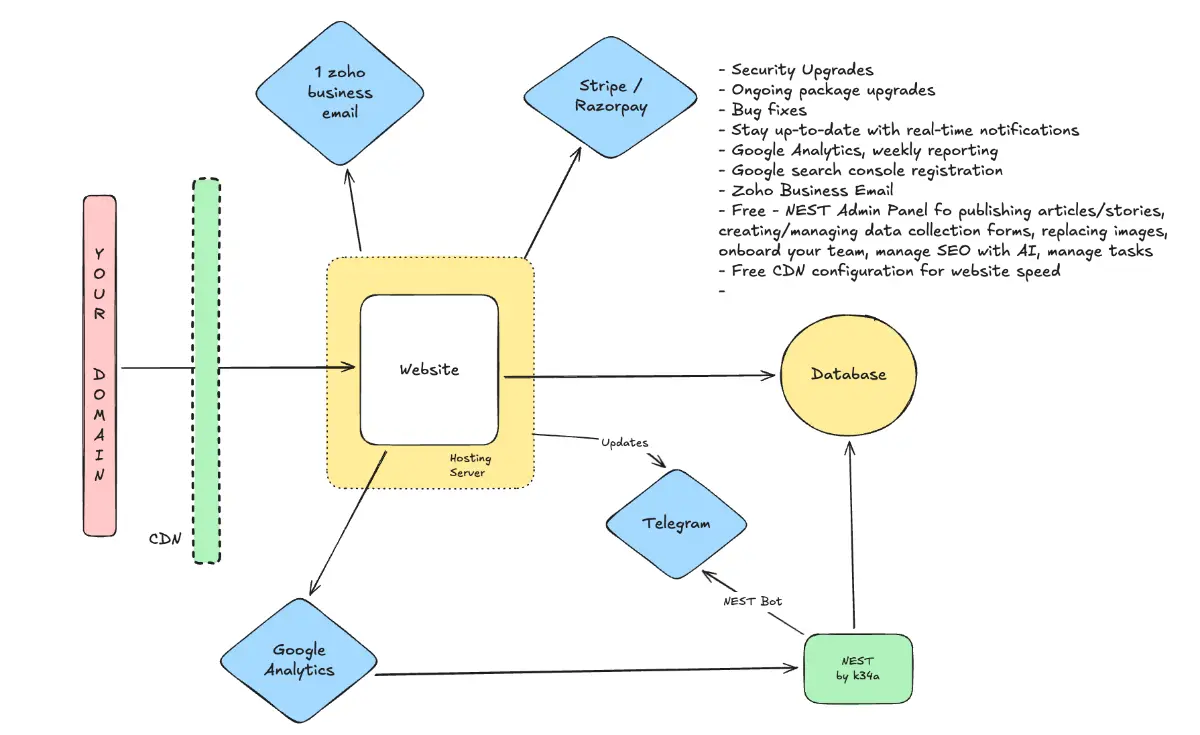
In one trading automation platform we built, the first version was designed as multiple services because it sounded scalable. In reality, traffic was predictable and low. We merged it into a well structured monolith. Deployment became simpler. Debugging became faster. Costs dropped to zero (0, yes you read that right!)
Ask yourself:
What problem is this system solving?
How will requests flow in this system. For example - from the end-user to the business logic, to the databases? Or something else?
What are peak load expectations? Neither over-estimate nor be too conservative. An internal tool won't have millions of requests per second until it is the core of your business.
Is the workload real time or batch? Do we serve all the requests together in a single go, or we process every request as it arrives?
What happens on failure? How do you want your system to behave in such cases? Yes you need to plan for it.
Do you need background workers?
Is caching required? How can it be used to reduce your costs?
How will you handle concurrency?
How will you version APIs? Because systems evolve, and we need to support users using old version of our software as well. Think about what would happen if Apple releases a new iPhone and all previous ones stop working. That would cause issues, right?
How will you migrate schema safely?
What monitoring and alerts are required? Let's say your system crashes at 2 am when your are in deep sleep, and one of your most critical users is using your system. How will you know? You should setup alerts.
Architecture decisions must match business stage. Early stage products benefit from simplicity. Scale should be introduced when metrics demand it.
Backend design is strategic thinking, not just code generation.
Once you have this plan ready, you can start vibe coding the components of the system one by one.
4. Database: Choose for the Business
Do not pick a database because it is trending.
In a data heavy analytics tool we built, the client initially wanted multiple databases for flexibility. After reviewing the data model, we realized a single relational database with proper indexing could handle both transactions and reporting for their scale. We proposed to add read replicas later when traffic increased (we still haven't required to add those even after 3+ years).
Ask yourself:
Is the data relational?
Do you need strong consistency?
Is workload read heavy or write heavy? Do you have too many writes in your database? Or is it like writing is infrequent and a lot of people read data from the same data?
Do you need full text search? Like google?
What is projected data growth? How will it increase in next 1 month, or next 1 year?
Do you need analytics queries on live data?
Many businesses can run effectively on a single well tuned relational database for years.
Multiple databases increase operational overhead. Add complexity only when required by scale or use case.
Schema design should be clean and intentional. Poor structure leads to long term pain.
5. Security: Design It Early
Security must be part of the architecture.
In one internal admin tool we audited, all roles had broad access because it was easier during development. Later, access control became difficult to restructure. We redesigned it with clear Role Based Access Control and Just In Time access for sensitive operations. That reduced internal risk significantly.
Think about:
Authentication and authorization model.
Role Based Access Control.
Just In Time access if users are accessing sensitive information owned by others
Rate limiting protects you from abuse and accidental overload.
API gateway protection
Input validation for hackers
Encryption of sensitive data so that unauthorized people are not able to read/access/modify such data.
Logging and audit trails so that we know what happened, and who did that, in case something wrong happens.
Logging is not optional. Every critical action must be traceable.
If you are using some dependencies, how will you upgrade them?
If you are storing some API keys, or secrets, where will you store them safely? How will they be rotated?
Environment separation - because you need to be able to run a test environment for testing or development purposes which is separate from your production environment.
Security maturity signals professionalism in the software you are vibe coding.
6. Content: Align With Reality
Technology builds the product. Content builds demand.
We once worked with a retail brand that had a static content calendar. During heavy rainfall in their region, competitors immediately shifted messaging toward weather specific products. They gained traction because they responded faster.
Your content strategy must be dynamic.
Plan around:
Industry events.
Festivals.
Seasonal shifts.
Market trends.
Real world incidents.
If you sell raincoats and rainfall increases, create relevant content immediately. Tie your product to the moment.
Before writing an article, define:
Target audience.
Core message.
Keywords.
Problem solved.
Call to action.
Provide structured inputs to AI. Refine the output. Add real insights. Improve SEO. Increase clarity.
AI will help you draft things. You will have to curate and sharpen it. Remove any em-dashes. Don't use too many emoticons. Keep sentence length medium sized. Don't use jargons and keep words simple.
At K34a, we combine technical depth with business understanding. We have built and scaled multiple systems by keeping architecture practical, design distinct, and strategy aligned with market movement.
That is how products move from functional to powerful.